Price:€19.15






Ashwagandha is everywhere. It turns up on social media, in conversations about stress, in wellness routines and even alongside the much-talked-about "cortisol".
But behind its popularity lies a plant that has been used traditionally for centuries and which, in recent years, has also caught the attention of scientific research.
Its scientific name is Withania somnifera and it belongs to the group known as adaptogens. Much of the current research focuses on its possible role in the body's response to stress and, to a lesser extent, on aspects related to rest.1
The evidence is promising, but it also needs context. Here we explain what we know so far, how it is used and what to bear in mind before adding it to your routine.
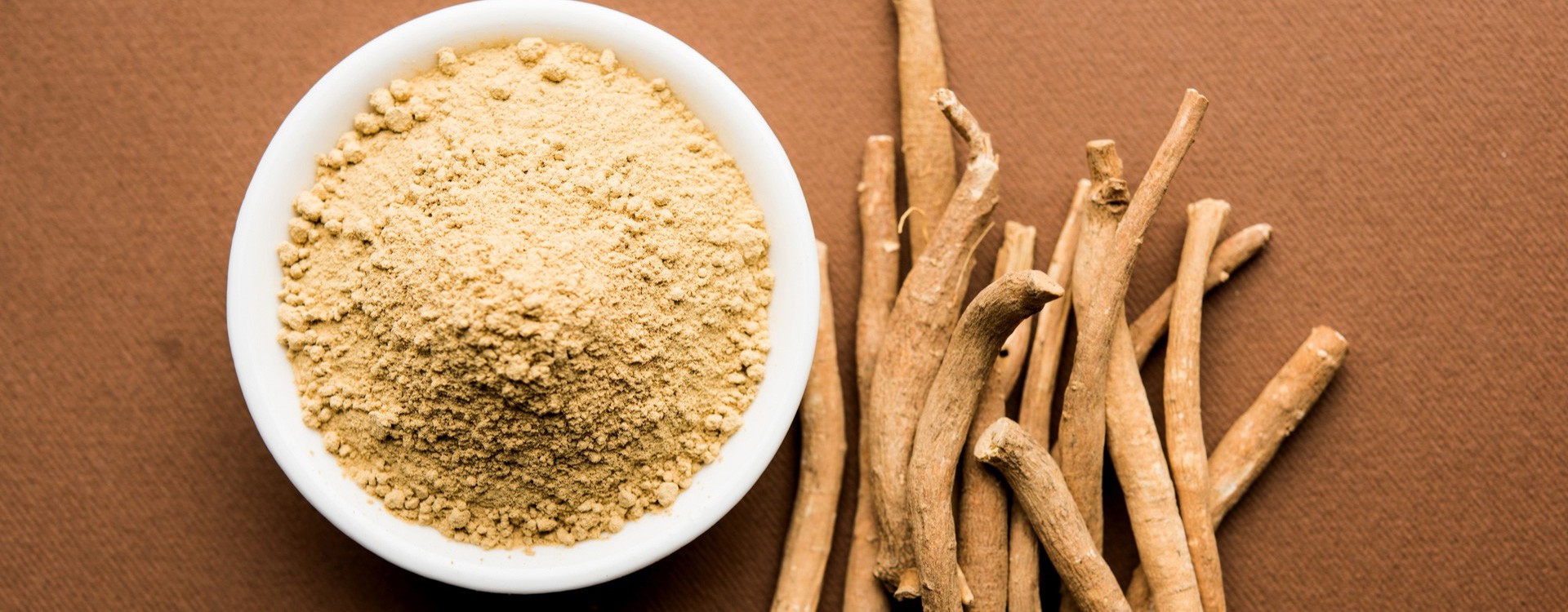
Ashwagandha (Withania somnifera) is a plant that has been used traditionally in Ayurvedic medicine for centuries.
Although its use is nothing new, its popularity in the West is. In recent years it has become one of the best-known ingredients in the world of wellbeing, particularly in contexts related to stress.
One of the reasons is that it is considered an adaptogen, a term we see more and more often when talking about food supplements.
Adaptogens are substances, mainly of plant origin, whose use has traditionally been associated with the body's ability to adapt to situations of greater physical or mental demand.
They do not work like a stimulant that provides an immediate burst of energy, nor like a sedative that makes you sleepy.
Rather, the concept of an adaptogen refers to substances studied for their possible influence on various mechanisms related to the body's response to stress.
And here it is important to draw a distinction: "adaptogen" does not mean that it eliminates stress, nor that its effects are the same for everyone.
Much of the current research on ashwagandha has focused precisely on stress.
Various clinical trials and reviews have studied its effect on variables such as perceived stress, anxiety and levels of cortisol, a hormone involved in the physiological stress response.2 3
The available results are promising. Some studies have found improvements in stress measures and reductions in cortisol levels following supplementation with certain ashwagandha extracts.
However, not all studies have found exactly the same results, and there are significant differences between the extracts used, the amounts, the duration of supplementation and the people studied.
For this reason, current evidence points towards a possible beneficial effect, but more research is still needed to establish precisely which doses, extracts and durations of use are most appropriate.
Ashwagandha does not remove whatever is causing us stress. It is being studied for its possible role in supporting the body's response to it.
Cortisol has become one of the main talking points in social media conversations about stress. But it is important to understand that it is not a "bad" hormone that we should try to get rid of.
Cortisol is part of the body's normal response and performs essential functions. Its levels vary throughout the day and respond, among other factors, to the sleep-wake cycle and to stressful situations.
Precisely because of its link with the stress response, some studies on ashwagandha have used cortisol levels as one of the parameters for assessing its possible effects.
Some trials and reviews have observed reductions in cortisol following supplementation with certain ashwagandha extracts. This does not mean, however, that we should use it simply to "lower cortisol".
The aim is not to keep cortisol as low as possible, but to maintain a physiological response that is appropriate to each situation.
Cortisol is not the enemy. It is a hormone our body needs.
Rest is another area in which ashwagandha has been studied.
Some studies have observed improvements in certain sleep-related parameters after using ashwagandha extracts for several weeks.4
However, the evidence in this area is more limited and does not support viewing ashwagandha as a product that induces sleep immediately.
Its interest lies more within an overall approach to wellbeing, especially when stress and difficulty switching off are part of everyday life.
And, as always, no supplement can replace the foundations of good rest: regular hours, a suitable sleep environment and habits that support sleep.
Ashwagandha has mainly been studied in adults and in contexts related to stress.
It may therefore be of interest to people going through periods of greater demand who are looking to add extra support to their wellbeing routine.
But that does not mean that everyone needs it, or that it should be used as an automatic response to any period of stress.
Getting enough sleep, eating well, staying active, making time to rest and addressing whatever is causing the stress remain the foundations.
Supplements can complement your habits. Not replace them.
There is no single amount or regimen that applies to all ashwagandha products.
The available studies have used different extracts, concentrations and amounts, so it is important to follow the specific directions for the food supplement you choose.
Nor is there a universally established "best" time to take it.
Rather than looking for the perfect moment, what matters is following the product's directions for use and sticking to the recommended regimen.
Ashwagandha should not be thought of as an ingredient with an immediate effect.
The possible effects observed in research have generally been studied after periods of supplementation, not after a single dose.
It therefore makes little sense to expect a particular sensation immediately after taking it.
Furthermore, the response may vary from person to person and depend on the extract, the amount used and other individual factors.
This is an important question, because the available safety evidence is mainly concentrated on relatively short periods of use.
Although various clinical trials have studied its use over several weeks, we still have less information about its safety when used over extended periods.5
It is therefore advisable to always follow the product's directions and to consult a healthcare professional if you have any doubts about continued use.
The fact that an ingredient is of plant origin does not mean that it is suitable for everyone.
Ashwagandha can cause adverse effects and interact with certain medicines, and it is not recommended in some situations.5
If you are pregnant or breastfeeding, have a medical condition (particularly one affecting the thyroid, an autoimmune disease or a liver condition), or are taking medication, consult a healthcare professional before using supplements containing ashwagandha.5
Natural does not mean suitable for everyone.
Stress cannot be managed with a single ingredient.
Rest, a balanced diet, physical activity, organising our time and setting aside moments to switch off remain the foundations.
When we are looking for extra support, food supplements can be part of that routine. Within this approach, we can choose formulas that combine different ingredients related to emotional wellbeing.
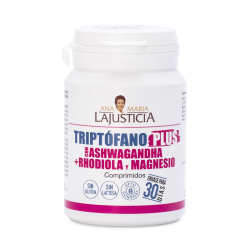
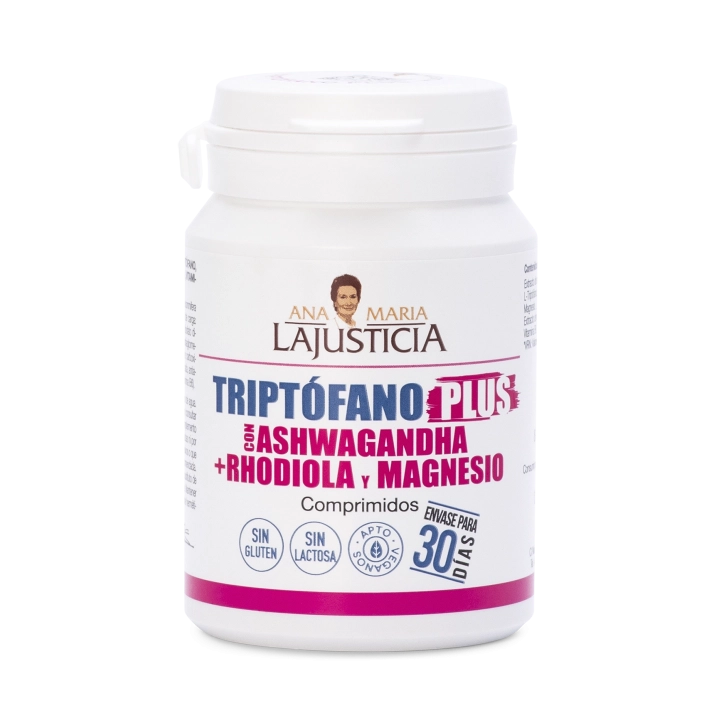
At Ana María Lajusticia® you will find Tryptophan PLUS with Ashwagandha and Rhodiola, a formula that combines tryptophan, ashwagandha, rhodiola, magnesium and vitamin B6.
Magnesium and vitamin B6 contribute to the normal functioning of the nervous system and to normal psychological function. Both also contribute to the reduction of tiredness and fatigue.6
Habits are the foundation. Supplements are there to support them.
Ashwagandha has been used traditionally for centuries, but its current popularity has also increased scientific interest in understanding its possible effects.
The available research is promising, particularly in relation to stress and certain parameters such as cortisol. Its relationship with rest is also being studied.
However, questions remain about aspects such as optimal amounts, differences between extracts and long-term use.
So rather than seeing it as a solution to stress, it makes sense to view it as a possible tool within something much broader: our habits and the way we look after our everyday wellbeing.
Understanding what you take is also part of taking care of yourself.
1. Singh N, Bhalla M, de Jager P, Gilca M. An overview on ashwagandha: a Rasayana of Ayurveda. African Journal of Traditional, Complementary and Alternative Medicines. 2011;8(5 Suppl):208-213. https://doi.org/10.4314/ajtcam.v8i5S.9
2. Chandrasekhar K, Kapoor J, Anishetty S. A prospective, randomized double-blind, placebo-controlled study of a high-concentration full-spectrum extract of ashwagandha root in reducing stress and anxiety in adults. Indian Journal of Psychological Medicine. 2012;34(3):255-262. https://doi.org/10.4103/0253-7176.106022
3. Lopresti AL, Smith SJ, Malvi H, Kodgule R. An investigation into the stress-relieving and pharmacological actions of an ashwagandha extract. Medicine. 2019;98(37):e17186. https://doi.org/10.1097/MD.0000000000017186
4. Cheah KL et al. Effect of Withania somnifera extract on sleep: a systematic review and meta-analysis. PLOS ONE. 2021;16(9):e0257843. https://doi.org/10.1371/journal.pone.0257843
5. National Institutes of Health, Office of Dietary Supplements. Ashwagandha: Health Professional Fact Sheet. https://ods.od.nih.gov/factsheets/Ashwagandha-HealthProfessional/
6. European Commission. Commission Regulation (EU) No 432/2012 establishing a list of permitted health claims made on foods. https://eur-lex.europa.eu/legal-content/EN/TXT/?uri=CELEX%3A32012R0432
 Post-holiday blues: how to ease back into your routine